The Importance of Replacing Inline Filters Every 6 Months
Posted by Brianna Ceballos on 14th Jul 2026
Why Inline Filters Should Be Replaced Every Six Months
Inline filters play a major role in protecting your compressed air system, equipment, products, and production processes. Replacing them on schedule can help prevent contamination, pressure loss, higher energy costs, and unexpected downtime.
What Is an Inline Compressed Air Filter?
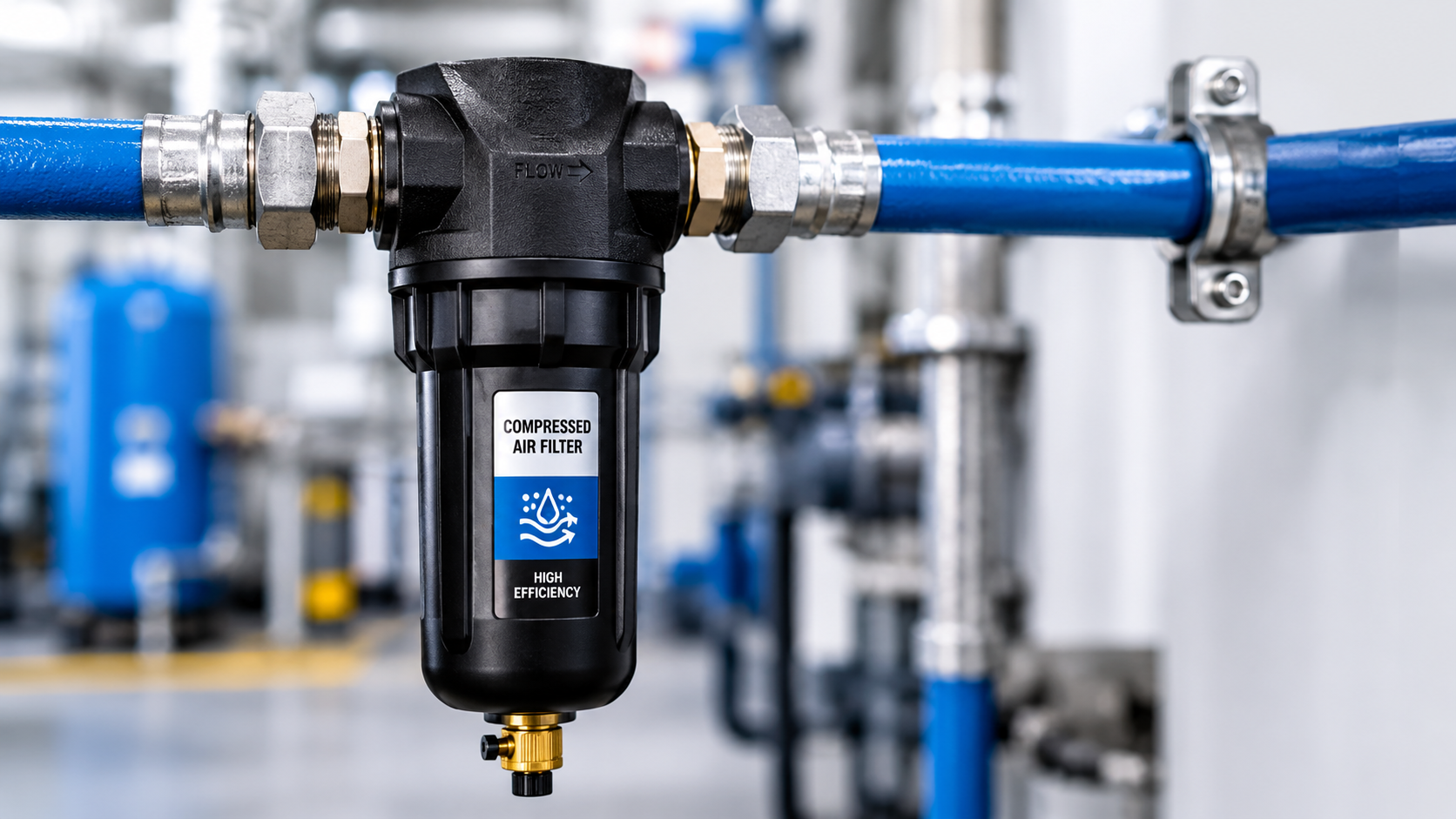
An inline compressed air filter is installed directly within the air line to remove contaminants from the compressed air stream. Depending on the filter type and filtration grade, it may remove solid particles, liquid water, oil aerosols, odors, vapors, or a combination of contaminants.
These filters are commonly installed after the compressor, receiver tank, or air dryer. They may also be installed near individual pieces of equipment that require cleaner compressed air.
|
1
Air Compressor |
2
Receiver Tank |
3
Air Dryer |
4
Inline Filter |
5
Clean Air |
What Do Inline Filters Remove?
|
?
Liquid WaterWater vapor condenses as compressed air cools. Inline filtration helps remove liquid droplets before they reach air tools, machines, valves, and production processes. |
⚙️
Oil AerosolsOil-lubricated compressors may introduce tiny oil droplets into the airflow. Coalescing filters capture these aerosols and separate them from the compressed air. |
|
●
Dirt and ParticlesDust, rust, pipe scale, sealant fragments, and debris can travel through compressed air piping and damage sensitive components. |
☁️
Oil Vapor and OdorsActivated carbon filters may be used to reduce hydrocarbon vapor, oil-related odors, and other gaseous contaminants. |
Why Replace Inline Filters Every Six Months?
A six-month replacement schedule is a practical preventive maintenance interval for many industrial compressed air systems. As contaminants collect inside the element, airflow becomes more restricted and the filter becomes less efficient.
Replacing the element before it becomes heavily loaded helps maintain consistent airflow, pressure, and air quality.
Filters may need to be replaced sooner when:
- The compressor operates continuously or for long shifts.
- The facility has high humidity.
- The piping contains rust or debris.
- The compressor has excessive oil carryover.
- The pressure drop across the filter increases.
- The application requires especially clean air.
What Happens When an Inline Filter Is Not Replaced?
1. Pressure Drop Increases
A dirty filter makes it harder for compressed air to pass through. This can reduce the pressure available to downstream equipment.
2. Energy Costs Can Increase
Operators may raise compressor pressure to compensate for a restricted filter. Producing higher pressure than necessary uses additional energy.
3. Air Quality Can Decline
An overloaded or damaged filter element may allow water, oil, or particles to travel farther downstream.
4. Equipment Can Wear Prematurely
Contaminated compressed air can damage pneumatic valves, cylinders, controls, instruments, spray equipment, and other components.
5. Product Quality May Be Affected
In painting, packaging, food processing, and other sensitive applications, contaminated air may contribute to defects, rejected products, or delays.
Common Types of Inline Filters
| Filter Type | Purpose | Typical Use |
|---|---|---|
| Particulate Filter | Removes dirt, rust, scale, and solid particles. | Used before dryers or near equipment. |
| Coalescing Filter | Removes water droplets and oil aerosols. | Common after dryers and compressors. |
| High-Efficiency Filter | Removes smaller particles and finer oil aerosols. | Used for sensitive processes. |
| Activated Carbon Filter | Reduces oil vapor, odors, and hydrocarbon vapor. | Used as a final filtration stage. |
Signs Your Inline Filter Needs Attention
- Reduced air pressure at tools or equipment
- A high differential-pressure reading
- Moisture or oil downstream
- Slow or inconsistent pneumatic equipment
- Visible corrosion or damage to the filter housing
- A drain that is blocked or not operating properly
Inline Filter Maintenance Includes More Than the Element
During filter service, the housing, seals, drain, pressure indicator, and overall condition should also be inspected.
- Confirm the replacement element matches the filter model.
- Inspect the housing for corrosion or damage.
- Inspect and replace seals when necessary.
- Verify that the automatic drain works correctly.
- Check the system for air leaks after service.
- Record the replacement date.
Is It Time to Replace Your Inline Filters?
ProParts Inc. can help identify the correct replacement elements, inspect your compressed air treatment equipment, and create a preventive maintenance plan for your system.
Contact ProParts Inc.Replacement intervals vary by manufacturer, operating hours, environmental conditions, filter type, and pressure-drop readings. Always follow the equipment manufacturer’s recommendations.